Commercial interiors face constant wear from heavy foot traffic, daily cleaning, and frequent use. Choosing durable commercial surfacing materials is one of the most important decisions for maintaining attractive, functional spaces over the long term. Businesses, designers, and facility managers often prioritize materials that balance durability, aesthetics, and maintenance efficiency. Hyundai L&C offers surface solutions designed to meet the demands of modern commercial environments while supporting a wide range of design goals.
Why Durable Commercial Surfacing Materials Matter
Commercial spaces place greater demands on interior finishes than residential environments. Restaurants, offices, hotels, retail stores, healthcare facilities, and educational buildings require surfaces that continue performing under constant use.
Well-selected surfacing materials help provide:
- Longer service life
- Reduced maintenance requirements
- Consistent visual appeal
- Better resistance to stains and scratches
- Lower long-term replacement costs
- Improved cleanliness
Rather than focusing only on initial installation costs, many organizations evaluate the overall lifecycle value of their materials.
Key Qualities to Look For
Not all surfacing products perform the same under commercial conditions. Evaluating material characteristics before selecting a surface helps avoid premature repairs or replacements.
Important qualities include:
Durability
Commercial surfaces should withstand repeated daily use without significant damage. High-quality materials resist scratches, chips, and surface wear while maintaining their appearance.
Moisture Resistance
Many commercial environments experience regular exposure to water, cleaning solutions, and humidity. Moisture-resistant surfaces help reduce the risk of swelling, deterioration, and staining.
Easy Maintenance
Facilities benefit from materials that require simple cleaning using common products instead of specialized treatments or sealing schedules.
Consistent Appearance
Large commercial installations often require multiple slabs or sheets. Materials with consistent color and pattern create a more uniform finished appearance.
Design Flexibility
Today’s commercial projects often incorporate custom layouts, integrated workspaces, reception counters, wall panels, and specialty features. Surface materials should accommodate these design requirements without sacrificing durability.
Common Types of Commercial Surfacing Materials
Understanding the strengths of various materials helps designers choose the right solution for each application.
Quartz Surfaces
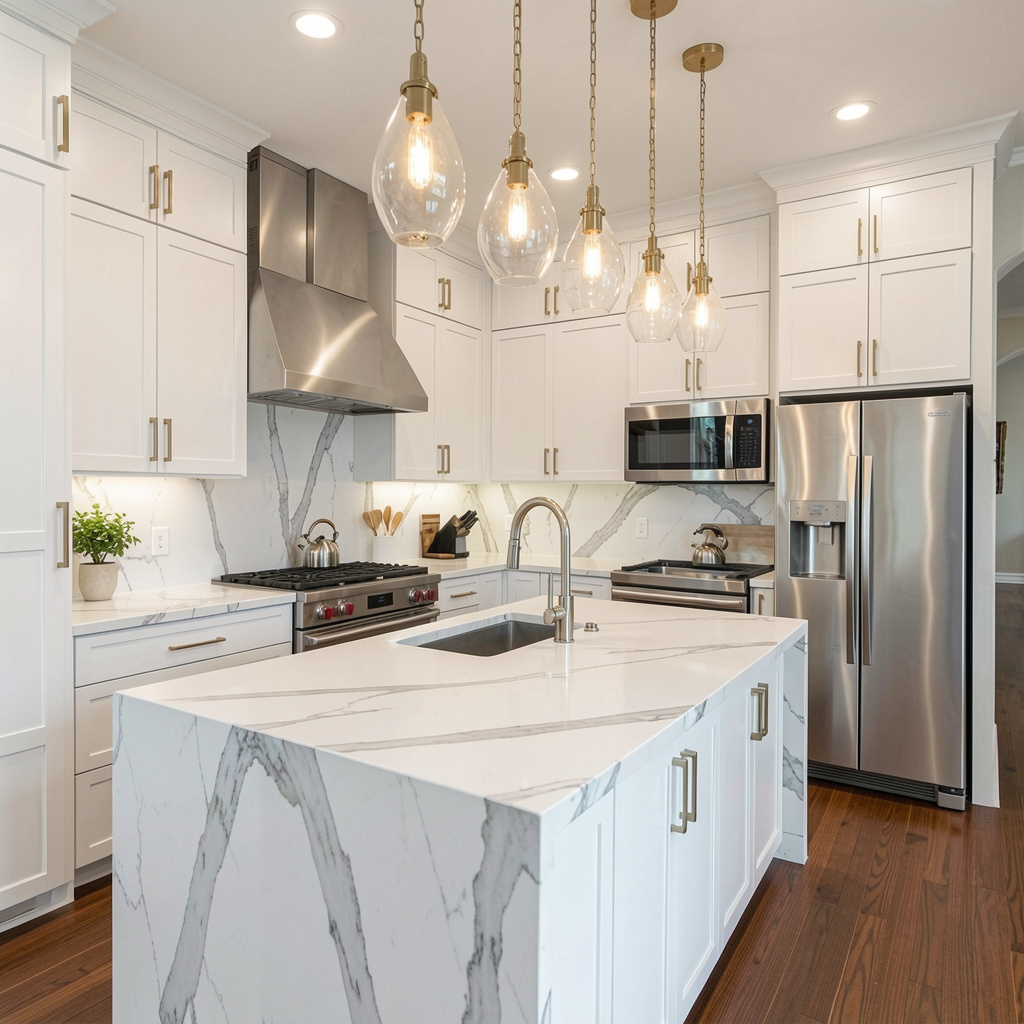
Quartz is widely selected for commercial countertops because it combines durability with a broad range of colors and patterns.
Benefits include:
- Excellent stain resistance
- Low maintenance
- Consistent appearance
- Strong scratch resistance
- No regular sealing required
Quartz works particularly well in offices, hospitality environments, retail spaces, and food service areas.
Acrylic Solid Surfaces
Solid surface materials provide seamless installations that are both attractive and practical.
Advantages include:
- Seamless joints
- Repairable surfaces
- Integrated sinks
- Hygienic designs
- Smooth, continuous appearance
These qualities make acrylic solid surfaces especially suitable for healthcare, laboratories, and hospitality projects.
Natural Stone
Granite and marble remain popular for premium commercial environments due to their distinctive natural appearance.
However, natural stone may require:
- Periodic sealing
- More maintenance
- Greater variation between slabs
These considerations should be evaluated alongside project requirements.
Laminate
Modern laminates provide affordable options for lower-impact commercial applications.
They offer:
- Wide design selection
- Budget-friendly installation
- Easy replacement
However, laminates generally have lower resistance to heavy wear compared to engineered stone or solid surfaces.
Choosing Materials Based on Commercial Applications
Different industries have different performance priorities.
Healthcare Facilities
Healthcare environments often prioritize:
- Easy sanitation
- Seamless surfaces
- Moisture resistance
- Reduced areas where contaminants may accumulate
Solid surface materials frequently meet these needs because they can be fabricated into continuous installations.
Hospitality
Hotels and restaurants require surfaces that combine visual appeal with dependable durability.
Popular applications include:
- Reception desks
- Bathroom vanities
- Bar tops
- Dining counters
- Guest room workspaces
Materials must withstand frequent cleaning while maintaining an attractive appearance.
Retail Spaces
Retail interiors experience continuous customer traffic.
Surface materials should support:
- Attractive product displays
- Durable checkout counters
- Long-lasting fixtures
- Easy maintenance
Consistent finishes also help reinforce brand presentation.
Office Buildings
Modern offices often incorporate collaborative workspaces, break rooms, conference areas, and reception desks.
Commercial surfaces should balance:
- Professional appearance
- Daily durability
- Low maintenance
- Flexible design options
Factors That Influence Long-Term Performance
Selecting the right material is only one part of achieving long-lasting results.
Several additional factors contribute to overall performance.
Professional Fabrication
Precise cutting, edge finishing, and installation significantly affect the finished product.
Experienced fabrication helps ensure:
- Accurate measurements
- Proper support
- Secure seams
- High-quality finishing
Appropriate Material Thickness
Different applications require different thicknesses depending on structural needs and intended use.
Heavy-use countertops may require additional reinforcement compared to decorative wall installations.
Proper Installation
Even premium materials may underperform if installed incorrectly.
Professional installers understand:
- Expansion allowances
- Support requirements
- Joint placement
- Surface leveling
These details improve long-term reliability.
Balancing Aesthetics and Functionality
Commercial design extends beyond durability alone.
Today’s projects often emphasize creating welcoming, memorable environments while supporting operational efficiency.
Modern surfacing materials are available in:
- Neutral tones
- Marble-inspired designs
- Concrete-inspired finishes
- Bold contemporary colors
- Minimalist styles
- Textured appearances
This variety allows architects and designers to coordinate surfaces with branding, lighting, flooring, cabinetry, and furnishings.
Sustainability Considerations
Many commercial construction projects now include sustainability objectives.
Material selection can contribute by supporting:
- Long product lifespan
- Reduced replacement frequency
- Lower maintenance requirements
- Efficient fabrication practices
- Responsible material sourcing where available
Durable surfaces often reduce waste because they remain functional for many years before replacement becomes necessary.
Maintenance Tips for Commercial Surfaces
Proper maintenance helps maximize the lifespan of commercial installations.
Recommended practices include:
- Clean spills promptly.
- Use non-abrasive cleaning products.
- Avoid dragging heavy equipment across surfaces.
- Use protective pads beneath equipment.
- Follow manufacturer care recommendations.
- Inspect surfaces periodically for minor damage.
Routine maintenance is typically far less expensive than major repairs or complete replacement.
Planning a Successful Commercial Surface Project
Successful projects begin with careful planning.
Before selecting materials, project teams should evaluate:
- Expected traffic levels
- Daily maintenance routines
- Moisture exposure
- Design objectives
- Budget
- Installation schedule
- Long-term operating costs
Considering these factors early helps identify materials that provide the best overall value rather than focusing solely on initial purchase price.
Emerging Trends in Commercial Surfacing
Commercial interiors continue evolving alongside workplace design and customer expectations.
Current trends include:
Larger Surface Installations
Larger-format materials create cleaner visual lines with fewer seams, supporting contemporary architectural styles.
Multi-Functional Spaces
Flexible commercial environments often require surfaces suitable for collaboration, dining, meetings, and customer interaction within the same space.
Seamless Integration
Reception desks, workstations, counters, wall panels, and shelving increasingly use coordinated materials to create cohesive interiors.
Neutral Design Palettes
Soft whites, warm grays, natural stone looks, and subtle textures remain popular because they complement changing décor over time.
Avoiding Common Material Selection Mistakes
Commercial projects can benefit from avoiding several common mistakes.
These include:
- Selecting materials based only on appearance
- Ignoring maintenance requirements
- Underestimating traffic levels
- Choosing products without considering fabrication quality
- Overlooking long-term ownership costs
A balanced evaluation of performance, maintenance, aesthetics, and budget typically produces better long-term outcomes.
The Value of Investing in Quality Surfaces
Commercial surfaces influence both daily operations and customer perception.
Durable materials can help reduce downtime associated with repairs while supporting cleaner, more professional environments. Over time, lower maintenance demands and extended service life often contribute to improved value for property owners and facility managers.
As businesses continue prioritizing functional, attractive interiors, selecting high-quality surfacing materials remains an important part of creating spaces that perform reliably year after year.
Conclusion
Selecting durable commercial surfacing materials requires balancing performance, appearance, maintenance, and long-term value. By understanding the strengths of quartz, acrylic solid surfaces, natural stone, and laminate, designers and facility managers can make informed decisions that support both operational efficiency and visual appeal.
Working with trusted manufacturers such as Hyundai L&C and following best practices for fabrication, installation, and maintenance helps create commercial spaces that remain attractive, functional, and dependable for years to come.
About the Author