Woodworm infestations can cause serious damage to furniture, roof timbers, floor joists, and structural beams if left untreated. For decades, chemical woodworm treatments have been one of the most common methods used to protect timber from wood-boring beetles. These products can be highly effective when selected appropriately and applied according to the manufacturer’s instructions.
However, many homeowners are now exploring chemical-free alternatives because they want to reduce pesticide use inside their homes, protect indoor air quality, and adopt more environmentally conscious maintenance practices. Understanding both the advantages and potential drawbacks of chemical treatments can help property owners make informed decisions.
In this guide, we’ll examine the potential considerations associated with chemical woodworm treatments, compare them with modern heat-based methods such as microwave treatment, and explain why many people are choosing chemical-free solutions.
What Are Chemical Woodworm Treatments?
Chemical woodworm treatments use specially formulated insecticides or wood preservatives to control wood-boring beetles and, in some cases, help protect timber from future infestations.
Depending on the product and the situation, treatments may be applied by:
- Brushing
- Spraying
- Injection
- Pressure treatment (typically before timber is installed)
The effectiveness of these products depends on factors such as the type of wood, the extent of the infestation, and correct application.
Why Have Chemical Treatments Been Popular?
Professional chemical treatments remain widely used because they can:
- Control active woodworm infestations.
- Treat large areas of timber.
- Offer residual protection against future insect activity (depending on the product).
- Be suitable for many residential and commercial applications.
When applied correctly by trained professionals, they continue to be an important option in timber preservation.
Why Some Homeowners Prefer Chemical-Free Alternatives
Although chemical treatments are effective, some property owners choose non-chemical methods for reasons including:
- Reducing indoor pesticide exposure
- Avoiding chemical odors
- Minimizing environmental impact
- Preserving historic timber
- Personal preference for heat-based treatments
Rather than suggesting that chemical treatments are unsafe, it’s more accurate to say that some homeowners prefer methods that avoid pesticides altogether.
Consideration 1: Chemical Residues
Many wood preservatives leave active ingredients on or within the treated timber to provide ongoing protection.
For some homeowners, particularly those who prefer chemical-free living, the presence of these residues may influence their treatment choice.
This is one reason why microwave treatment has become increasingly popular—it eliminates insects through heat and leaves no pesticide residue behind.
Consideration 2: Temporary Odors
Some chemical woodworm products may produce noticeable odors during application or while drying.
Modern formulations vary considerably, and many have lower odor levels than older products.
Professional contractors usually provide guidance on ventilation and re-entry after treatment.
Consideration 3: Environmental Impact
Chemical treatments are regulated and designed for safe use when applied according to instructions.
Nevertheless, some homeowners prefer to reduce the use of synthetic pesticides wherever practical to help minimize environmental impact.
Heat-based treatments, such as microwave technology, achieve pest control without applying insecticides directly to the timber.
Consideration 4: Sensitive Environments
In locations such as:
- Museums
- Historic churches
- Libraries
- Heritage buildings
- Archive collections
conservation professionals may consider treatment options that avoid introducing chemical residues onto valuable or historic materials.
The most appropriate solution depends on the building, the infestation, and conservation requirements.
Consideration 5: Surface Penetration
Chemical treatments generally work by penetrating the timber from the surface inward.
The depth of penetration can vary depending on:
- Timber species
- Moisture content
- Surface coatings
- Product formulation
- Application method
Professional assessment helps determine whether chemical treatment is suitable for the specific infestation.
Microwave Treatment as an Alternative
Microwave woodworm treatment takes a completely different approach.
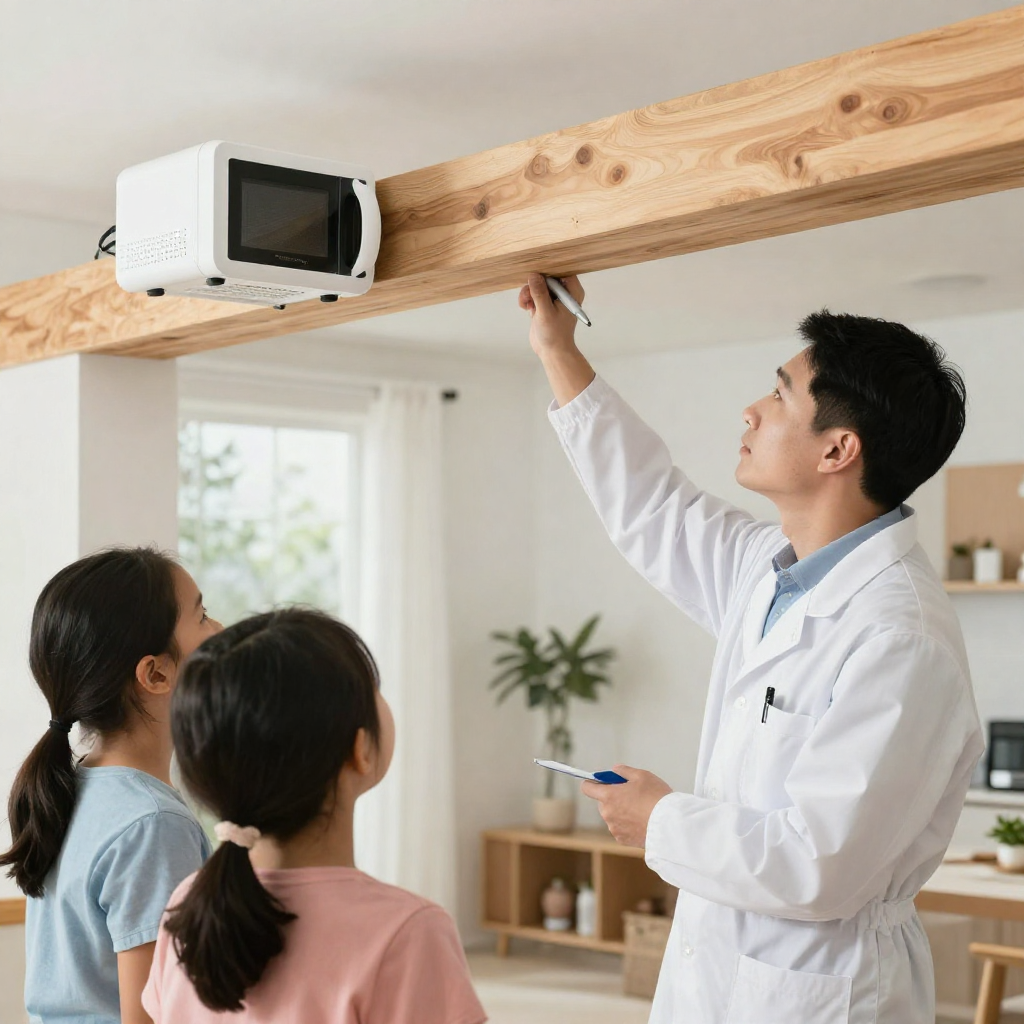
Instead of using pesticides, professional equipment generates controlled heat inside the timber through dielectric heating.
When the timber reaches temperatures of approximately 55–60°C (131–140°F), the heat is intended to eliminate:
- Woodworm larvae
- Beetle eggs
- Pupae
- Adult beetles
Because no chemical preservatives are applied, microwave treatment leaves no pesticide residue.
Chemical Treatment vs. Microwave Treatment
| Feature | Microwave Treatment | Chemical Treatment |
|---|---|---|
| Uses Pesticides | No | Yes |
| Leaves Chemical Residue | No | Usually yes |
| Uses Heat | Yes | No |
| Localized Treatment | Excellent | Good |
| Residual Protection | No | Often available |
| Suitable for Heritage Timber | Often considered | Depends on the product and conservation requirements |
Both approaches have advantages, and the most suitable choice depends on the property’s condition and treatment goals.
Does Chemical Treatment Repair Damaged Timber?
No.
Chemical treatments eliminate or help control insects, but they do not restore timber already weakened by:
- Woodworm
- Rot
- Fungal decay
- Moisture damage
Structural repairs may still be required after the infestation has been addressed.
Benefits of Microwave Treatment
Many homeowners choose microwave treatment because it offers:
Chemical-Free Operation
No insecticides or pesticides are applied.
No Residues
The timber remains free from chemical coatings after treatment.
Targeted Heating
Only the affected timber is treated.
Environmentally Friendly
The method reduces reliance on synthetic pesticides.
Suitable for Valuable Timber
Microwave treatment is frequently considered for:
- Heritage buildings
- Antique furniture
- Museums
- Churches
- Historic timber structures
where preserving original materials is a priority.
Preventing Future Woodworm Problems
Regardless of the treatment chosen, prevention remains essential.
Protect your timber by:
- Repairing roof leaks promptly.
- Improving ventilation.
- Keeping structural timber dry.
- Reducing indoor humidity.
- Inspecting roof spaces annually.
- Monitoring furniture for fresh frass and exit holes.
- Addressing damp conditions quickly.
Healthy timber is naturally less attractive to wood-boring beetles.
Common Myths About Chemical Treatments
Myth 1: Chemical Treatments Are Always Unsafe
Fact: Modern woodworm products are regulated and can be used safely when applied according to the manufacturer’s instructions and by qualified professionals.
Myth 2: Chemical-Free Treatments Are Always Better
Fact: The best treatment depends on the infestation, the condition of the timber, and the property’s specific requirements.
Myth 3: One Treatment Prevents Woodworm Forever
Fact: No treatment can guarantee that future infestations will never occur. Ongoing maintenance and moisture control remain essential.
When Should You Contact a Professional?
Professional advice is recommended if:
- Fresh frass continues appearing.
- New exit holes develop.
- Structural timber is affected.
- Valuable furniture requires treatment.
- You’re comparing chemical and microwave options.
- You’re unsure which treatment is appropriate.
A qualified timber preservation specialist can inspect the property and recommend the most effective solution based on the type of infestation, timber condition, and long-term preservation goals.
Conclusion
Chemical woodworm treatments have protected timber for many years and remain an effective option in many situations when applied correctly. However, some homeowners now prefer chemical-free alternatives because they want to reduce pesticide use, avoid chemical residues, and support environmentally responsible property maintenance. Microwave woodworm treatment offers one such alternative by using controlled heat instead of insecticides to eliminate wood-boring insects hidden inside timber.
The right treatment depends on the extent of the infestation, the condition of the wood, accessibility, and the needs of the property. A professional assessment is the best way to determine whether chemical treatment, microwave technology, or another approach is most appropriate. Combined with routine inspections, moisture control, and preventive maintenance, either method can help protect timber from long-term woodworm damage.Visit online https://www.shashel.eu for more details .
About the Author